
How Regenerative Systems Synthesize the Sharing vs Sparing Argument: "Marginal Lands"

In former posts I claimed that the sharing vs sparing argument is functionally obsolete because regenerative systems have the capacity to achieve the objectives of both. This means regenerative land use can increase food production efficiency per unit of land without the negative externalities of conventional “sparing” systems, and achieve the objectives of sharing systems as it relates to soil, water, and biodiversity. This is an audacious claim, one you should rightly be skeptical of, and it is also true. Here are the parameters of how we should think of comparing these systems. Remember, the fundamental question the sharing vs sparing argument is about is this: “How do we feed humanity without destroying the planet.”
First, time is a critical element that is frequently left out of the sharing vs sparing conversation. After all, sparing systems often produce huge amounts of calories per acre for a period of time, enabling populations to grow and then collapsing and causing significant population collapse (for example, this is the story of the Maya; deforestation led to exacerbated drought/flood cycles which eventually led to Mayan collapse). A system that feeds the world without destroying the planet needs to be able to do so indefinitely.
Second, only apples to apples comparisons allowed. So often we see corn fields in temperate climates on good black soil compared to scrubland used for grazing, and other such nonsense. When comparing systems we need to do so within context — so like-to-like koppen-geiger zones. (Note that the oceans and seas do not have corresponding koppen-geiger zones, which is indicative of how much we still treat oceans as if we are hunter/gatherers instead of cultivators and farmers)
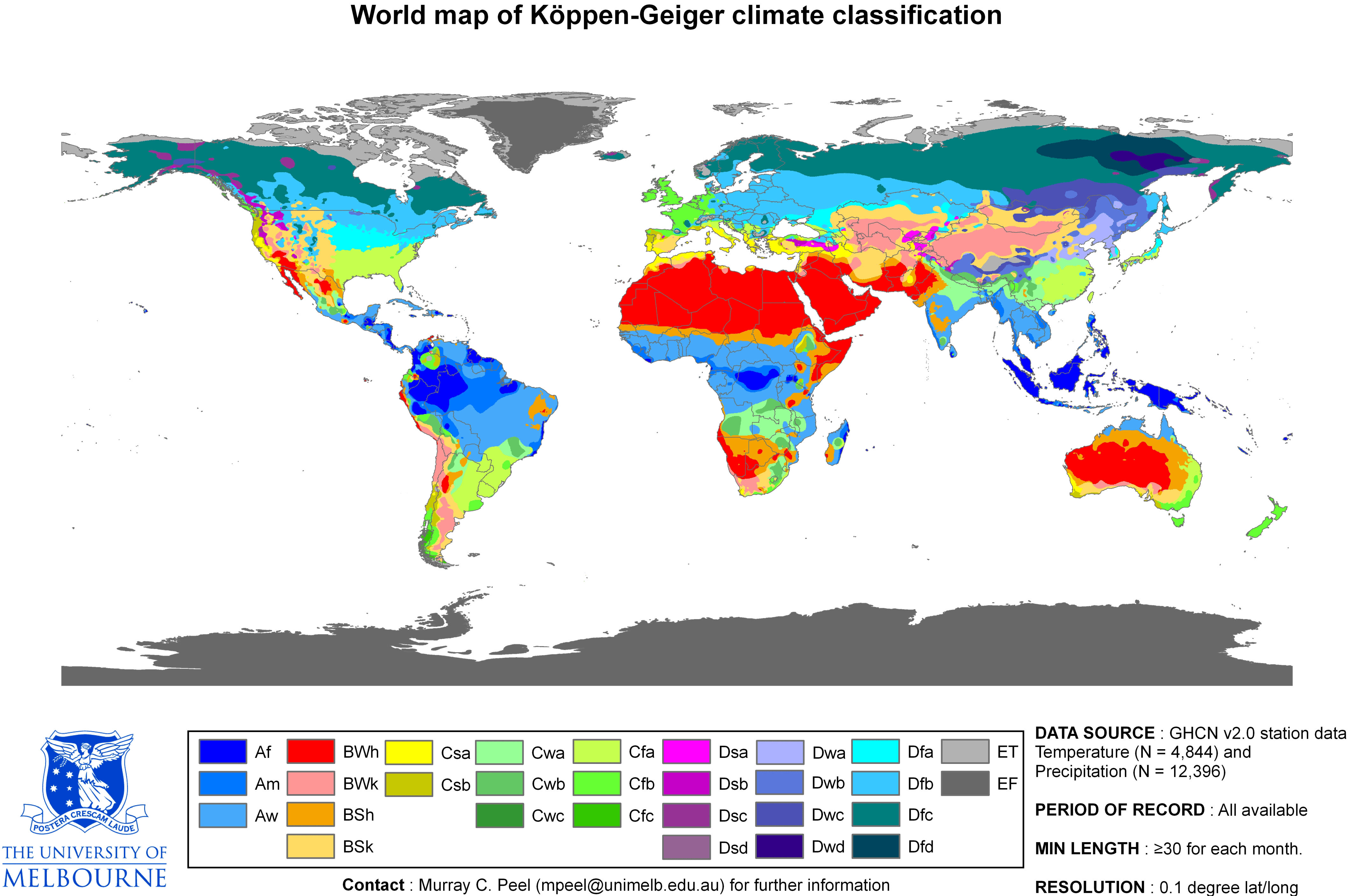
Third, we are going with the following definition of regenerative, which looks at outcomes instead of techniques:
Regenerative ag systems:
Increase water resources
Increase soil
Increase Biodiversity
Increase farmer / resource manager wealth.
Note that there is no such thing as a regenerative technique — there are techniques or practices that may lead to regenerative outcomes, but that depends on geographic and climatic context, as well as on markets, and the farmer / land manager. This is an important point in sifting through the regenerative greenwashing going on these days: It is outcomes that matter, not techniques or practices.
So let’s get started. We’ll start with the low-hanging fruit, which is marginal landscapes. Marginal land is land that’s almost arable, though not necessarily appropriate for grains and other crops. On the map above, that’s everything red and orange, and also large swaths of the yellow, and pink. It should be noted however, that land marked with other colors is becoming marginal (via the cycle i keep posting) through ag-driven degradation.
The most marginal land on the planet I have worked was two watersheds in the GCC region — one in Al Baydha, and one in the Emirate of Fujairah. Both hyperarid landscapes with pronounced drought/flood cycles, minimal rainfall (about 50 mm per year), sodic soils, and overall just very difficult-to-inhabit places.
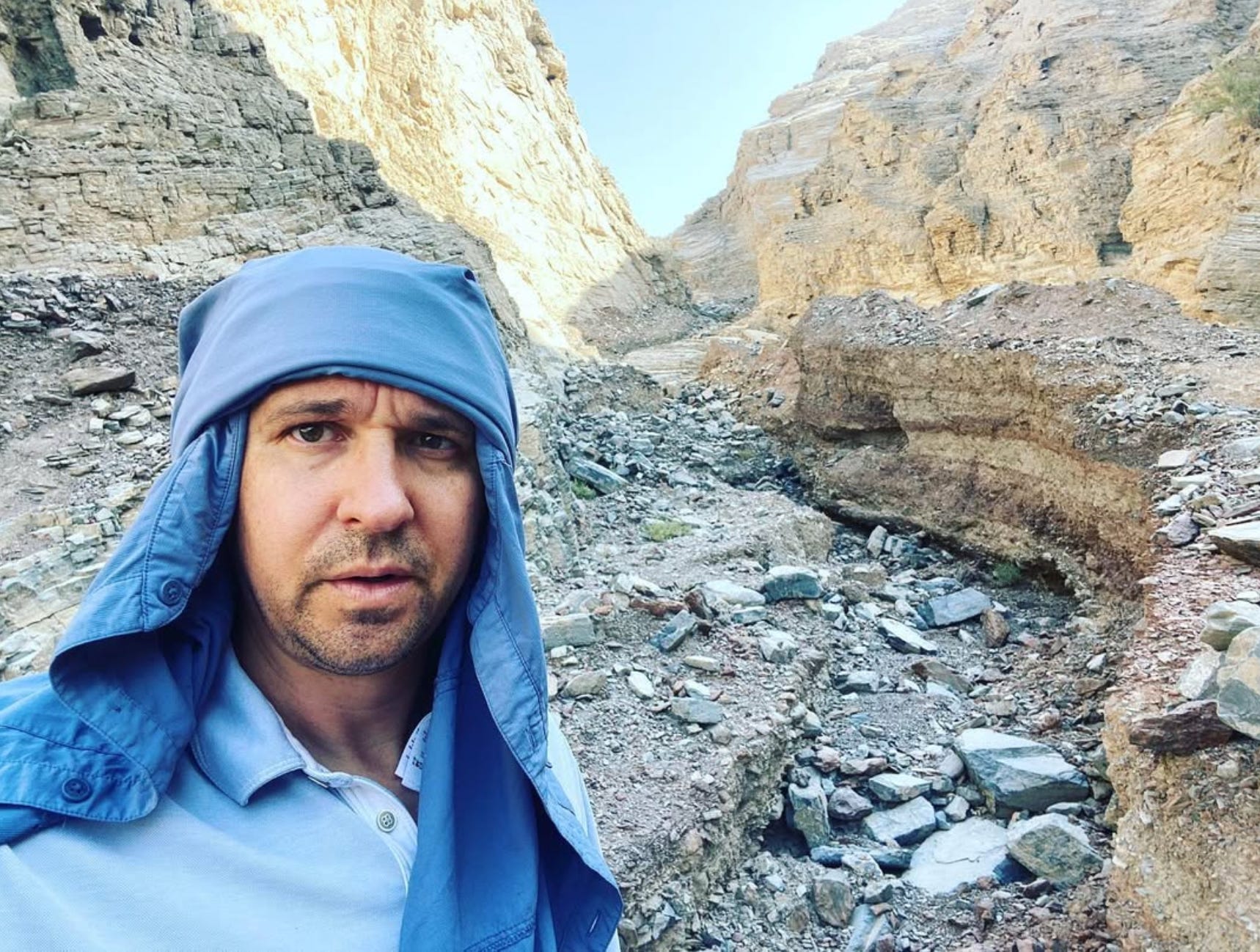
In other words, this land is non-arable, meaning not appropriate for annual crops, and with a P-E<0. That formula is simply looking at precipitation (P) minus evaporation (E). The PE formula is a useful diagnostic as it’s a broad indicator of water availability and of what water does in a given landscape.
What’s the carrying capacity of this land as it relates to conventional, industrialized ag? 0. What’s the carrying capacity of this land as it relates to a regenerative system? > 0. Through appropriate design, the landscape in the photo above would have been appropriate for a hyperarid silvopasture, with native Arabian Moringas (peregrina), ziziphus, acacias, and commiphora, with closely-managed grazing. In other words, this landscape could produce an oil crop, a fruit crop, honey, pharmaceutical and cosmetics inputs, and pasture, (at an estimated 50-100 acres per camel/goat pairing starting out, with an anticipated tripling of the carrying capacity over a decade). Importantly, landscapes like this make up about 35% of the global landmass, where the sparing models of ag produce 0. Even more importantly, a regenerative system in this type of watershed would increase the carrying capacity from what it is now, increase water resources, increase soil, increase biodiversity, and increase the income of whoever manages it.
But what about groundwater? After all, Saudi Arabia, at its peak agricultural production, was actually a wheat exporter, despite it being almost entirely nonarable land (with some exception in the oasis areas and the Southwest). As it turns out, it’s actually quite easy to grow grains in the desert, if you are willing to deplete an immense amount of aquifer water. According to the article, “Camels Don’t Fly, Deserts Don’t Bloom” by Elie Al Hadj, the Saudi consumed some 300 cubic kilometers of water, starting in the 1970s, and going into 1992 in a quest to be independent in wheat, representing somewhere between 60% and 80% of their non-renewable groundwater. To put this into perspective that is the equivalent of 120 billion olympic swimming pools of water, which had a one-time use, in order to become a wheat exporter. Over this period KSA quintupled the amount of land under cereal production, with a focus on wheat and barley. In other words 80% of KSA’s fossil water, which had taken thousands of years to build up, was consumed in less than 25 years. In Mr. Al Hadj’s words, “this experiment showed that a combination of money and water could make even the desert bloom, until either the money or the water ran out.”
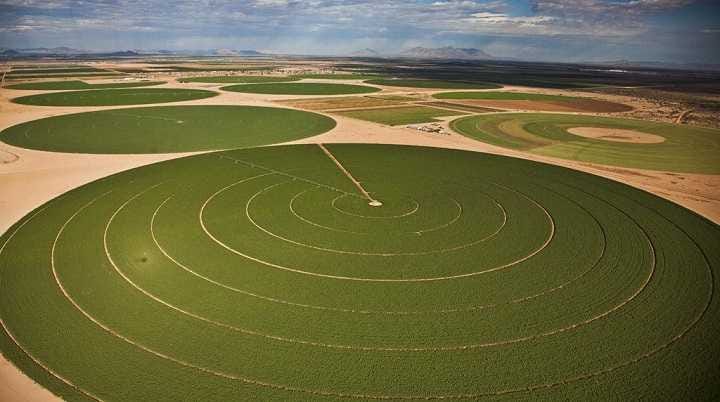
(Circle pivot irrigation became quite common in the Northern ag areas of KSA).
Thus in 1992, KSA wheat production peaked at 4.1 million tons. Since then smarter policies, by and large, have taken hold — more recently wheat production has been about .5 million tons —an 88% drop in production, due primarily to water scarcity and the reshuffling of subsidies. This oversimplifies the bigger picture of KSA agriculture (which has seen a significant drop in subsidies, both direct and indirect, and which has benefited from improvements in ag tech, and which has diversified into vegetables, fruits, other grains, and alfalfa), but it still illustrates the points I want to make:
1. Anyone can turn the desert green and productive if they are willing to consume fossil water to do so. This is a one-time-only use.
2. While the discussion about sharing vs. sparing tends to focus on land, the limiting resource for much of the world is not land, but water.
Let’s compare the KSA wheat adventure with the regenerative ag systems we developed in Al Baydha. At Al Baydha we also started with completely degraded land, which had seen significant deforestation. We had no soil, and averaged 50-60 mm of rain a year. Yet we were able to establish a silvopasture system with diversified outputs, while increasing total groundwater, increasing biodiversity, creating soil, inducing soil carbon sequestration, and increasing the carrying capacity of the land. What I don’t know, as i’ve not been involved with Al Baydha for about 7 years now, is what the peak carrying capacity of that land is under the systems we prototyped at Al Baydha, as that would require redoing Al Baydha on a much larger landscape in a similar climate, and with all the lessons learned from a decade of hyperarid regenerative ag prototyping. I look at systems like those implemented by Alejandro Carrillo in the Chihuahua Desert, who has more than tripled his carrying capacity in a grassland, with much more rain than we got in KSA, and think we could at least match that. Tripling is easier when you’re starting at near zero.
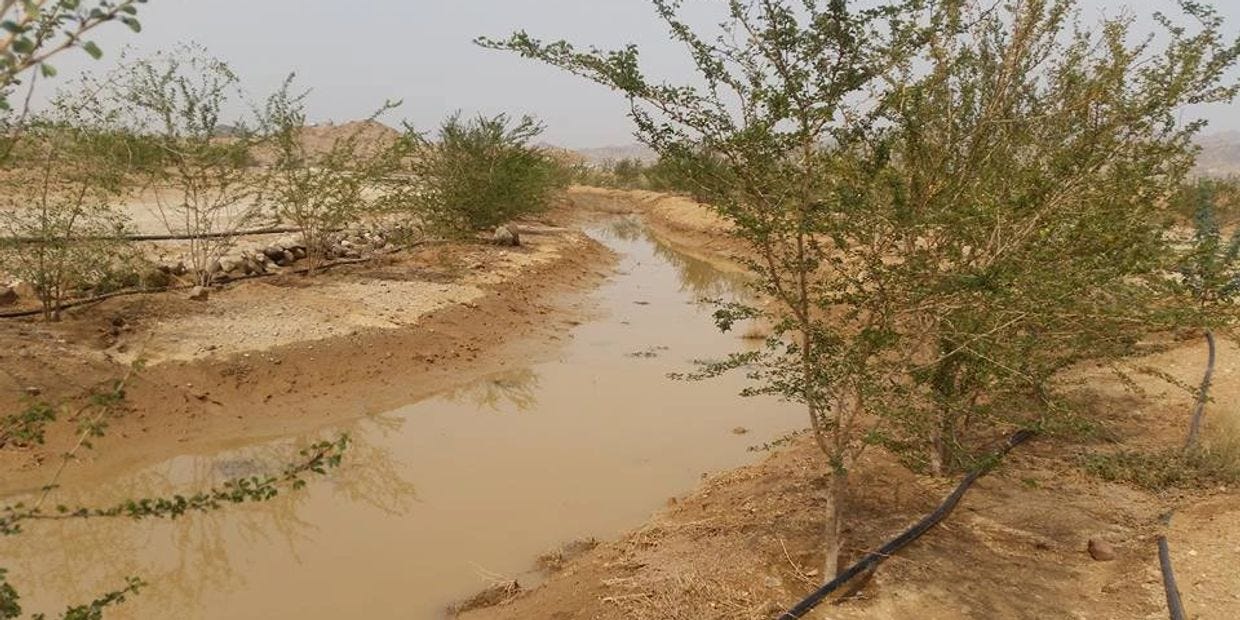
(A budding agroforestry system in the Saudi Desert at the Al Baydha Project—in this image primariliy pithecellobium and moringa spp in the photo).
This is one example where a regen ag system achieves both the objectives of sharing and sparing systems, while avoiding the weaknesses and pitfalls of both, and it’s easy to start with this because we’re talking about beyond-marginal land and non-arable land, which is where regenerative systems show the most comparative advantages. Of course, it’s important to keep in mind, with that point, that industrial ag systems make land marginal and non-arable.
I was pleased last week to be connected to a conversation about sharing-vs-sparing, in which Prof. Andrew Balmford pretty much came to the same conclusion, though he doesn’t use the term regenerative. In the video below, Prof. Balmford presented to the UK Royal Society that “sustainable intensification” is the only way to feed the world without costing the earth. For an example of what that looks like, he mentions silvopasture as an example (Al Baydha was a hyperarid silvopasture system). In that phrase “ sustainable intensification”, the word sustainable is doing a whole lot of work, as almost no intensive systems today are sustainable, and in contrast are extremely destructive. But it’s gratifying to see other folks who have put a lot of thought into this come to the similar conclusion.
In my next set of posts, i’m going to get specific on some of the work i’m doing with Regenterprise, though I also intend to write more, particularly beyond marginal landscapes and into other traditional farming landscapes, and show where emerging regenerative systems are outcompeting traditional “sparing” systems. There’s a lot more to show and tell how regenerative ag is the synthesis and the solution to the sharing vs. sparing problem.
Fascinating Neal. These posts are really thought provoking, educational and interesting. Some of the numbers/facts you mention blow my mind. Keep up the great work!
Great to see this post, Neal, and looking forward to seeing the future thread expanded on as you begin writing more!